In Morocco, neither the moneyed class nor the ruling regime deny the reality of climate change or its catastrophic impacts on the country. Official policy documents are replete with references to ‘sustainable development’, the ‘transition to a green economy’, ‘green growth’, ‘decarbonisation’, and related concepts.
This article adopts the term green public policies, as the reviewed literature, particularly official sources, makes no mention of green industrial policies. The term is used here to encompass all mechanisms and measures aimed at achieving the objectives articulated in this body of literature, including the ‘transition to a green economy’, ‘green growth’, and ‘decarbonisation’. A vast number of official documents address these issues from multiple perspectives.
This article is organised around the main axes of green public policies rather than a document-by-document review. This approach allows for a more systematic and effective analysis of the relevant literature.
1. Context
Interest in green investment emerged relatively early in Morocco. In the context of the energy crisis that accompanied the 2008–2009 global financial and economic crisis, Morocco launched its National Sustainable Development Strategy. This strategy was driven by the rising cost of fuel imports and their heavy burden on both the trade balance and the balance of payments, as Morocco relied, and continues to rely, on imports to meet more than 90% of its energy needs.
Before this period, official policy discourse already acknowledged the economic implications of environmental degradation and climate change. A government document issued in 2005 on the fiftieth anniversary of Morocco’s independence referred to ‘severe climatic changes tending toward structural transformation’. The document also cited ‘international agreements emerging from the Rio de Janeiro Summit, which encouraged Morocco to invest in Clean Development Mechanism projects following its accession to the Kyoto Protocol in 2002’.[1]
This early attention to environmental issues reflects the structural vulnerability of the Moroccan economy to climate change. Overall GDP growth in Morocco remains closely tied to agricultural output, which itself is highly dependent on climatic conditions.[2] When combined with the heavy burden of energy imports, these vulnerabilities pose significant constraints on the country’s stated ambition of economic takeoff at the beginning of the twenty-first century and sharply limit the fiscal space available to support investment.
In this context, international commitments to climate finance, particularly since 2010, when advanced economies pledged to mobilise $100 billion annually for developing countries by 2020, have figured prominently in Morocco’s policy calculations. Morocco has also positioned itself diplomatically within global climate governance. It hosted the Conference of the Parties on climate change in 2001 (COP7) and again in 2016 (COP22). Morocco submitted its Nationally Determined Contribution (NDC) to the UNFCCC secretariat in 2016 and an updated version in 2021.
Interest in green public policies surged following the announcement of the European Union Green Deal at the end of 2019. This momentum deepened further in the wake of the COVID-19 pandemic, Russia’s war on Ukraine, and rising trade tensions between the United States and China. It became especially pronounced after the European Union adopted the Carbon Border Adjustment Mechanism,[3] which took effect in 2023, and as competition between China and the United States escalated over strategic and critical minerals[4] used in electric vehicle battery production.
Morocco’s Long-Term Low-Carbon Development Strategy 2050, issued by the Ministry of Energy Transition and Sustainable Development of Morocco in October 2021, frames these developments as a form of ‘proactive positioning in a rapidly changing international and regional environment’. The strategy highlights perceived opportunities to improve Morocco’s trade and export position, particularly in light of the EU Green Deal and the prospect of carbon-based adjustments on imports at the EU’s borders.[5]
2. Official Moroccan Literature on Green Public Policies
As noted earlier, Morocco has produced a vast number of documents centred on the ‘transition to a green economy’ and ‘green growth’. Within this body of literature, three foundational documents serve as reference points for subsequent policy texts:
- The 2011 Constitution, which explicitly enshrines sustainable development in its preamble and in articles.
- The National Sustainable Development Strategy (October 2017),[6]which aims to accelerate the transition toward a green and inclusive economy by 2030.
- The New Development Model (April 2021),[7] which reaffirms Morocco’s commitment to the Sustainable Development Goals for 2030, while warning that achieving these objectives will remain difficult in the absence of a genuine transformation of the development trajectory.
All three foundational documents agree that the private sector plays a central role in implementing policies to reach the Sustainable Development Goals.
Article 35 of the Constitution places sustainable development immediately after freedom of enterprise and entrepreneurship, stating that:
The state guarantees freedom of enterprise and entrepreneurship, as well as free competition. It also works to achieve sustainable human development’.
Similarly, the National Sustainable Development Strategy emphasises that the private sector should actively develop sustainable solutions across key areas, including industry, transport, construction and energy.
This approach aligns closely with the limits placed on industrial policy by international financial institutions (see Section Two). The New Development Model reflects this framework by promoting a ‘new regulatory orientation’ that defines the state as a strategic, protective, and regulatory actor. In this vision, the state is confined to setting development priorities and objectives, while their implementation is entrusted to ‘key actors’, foremost among them the private sector, alongside the public sector operating through public–private partnerships.
This perspective forms the core of official documents on green public policies. It is articulated in the Morocco 2050: Long-Term Low-Carbon Development Strategy, issued by the Ministry of Energy Transition and Sustainable Development in October 2021, which states definitively:
Development challenges remain substantial and can only be addressed through stronger, sustainable, low-carbon, and resilient growth led by the private sector, capable of generating new decent jobs and promoting social and regional balance.[8]
Pillars of Green Public Policies
Morocco has formally committed to decarbonisation, a position articulated in the official New Development Model published in 2021. The document notes that: ‘International awareness of the negative effects of climate change on the overall balance of the ecosystem is increasing, which requires our country to reduce its level of carbon emissions’. From the state’s perspective, carbon reduction initiatives are also framed as ‘a source of industrial opportunities, competitive advantages, and job creation’.[9]
In June 2021, Morocco submitted an updated version of its NDC, aiming to reduce greenhouse gas emissions by 45.5% by 2030. 18.3% of this target is unconditional, and the remaining 45.5% is conditional on international climate finance and support.[10] In 2025, the Moroccan state revised its mitigation ambition for the 2035 horizon, raising the overall target to a 53% reduction in greenhouse gas emissions. The target is made up of an unconditional reduction of 21.6%, to be achieved through funding from the national budget, and a 31.4% reduction which depends on the mobilisation of international support in finance, technology transfer and capacity building.[11]
The revised NDC also introduces a significant shift by incorporating new industrial sub-sectors, notably cement and phosphates. Previously, the energy sector had been the focus of mitigation efforts under the National Sustainable Energy Strategy. Morocco has already announced its ambition to source 52% of installed electricity capacity from renewable energy by 2030. Under the revised commitments, the industrial sector is expected to account for half of national mitigation efforts by 2030, with the phosphate sector alone contributing 27.5% of Morocco’s 2030 mitigation targets.
In January 2022, the Ministry of Energy Transition and Sustainable Development issued the National Strategic Adaptation Plan (NSAP-2030). The document sets out a strategic orientation focused on initiating a structured reflection on how the industrial sector can adapt to climate change. It notes that, following the entry into force of the Paris Agreement, the government encourages companies to adopt priority measures required for its implementation and to mobilise the necessary resources.[12]
On 13 March 2023, the Kingdom of Morocco and the United Nations released the Sustainable Development Cooperation Framework for Morocco 2023–2027. This document likewise identifies a ‘strategic priority’ centred on supporting environmental transition efforts and promoting the development of a circular, low-carbon economy.[13]
Morocco’s commitment to carbon reduction appears closely linked to the objective of preserving access to international markets that are moving toward stricter environmental standards. This rationale is stated explicitly in the New Development Model, which notes that Morocco must reduce its carbon emissions ‘to ensure that its exportable supply is not adversely affected by future constraints’.
Given that the products of the phosphate giant OCP Group account for a significant share of Morocco’s exports (17% in 2023),[14] the phosphate sector has emerged, alongside cement and energy, as a central pillar of the country’s decarbonisation strategy.[15]
The OCP Group has positioned itself at the forefront of what is framed as ‘green growth’. The group launched a Green Investment Programme for the 2023–2027 period, with a stated objective of ‘expanding mining extraction and fertiliser production capacities while committing to carbon neutrality by 2040’. The programme is backed by an investment envelope of $12 billion.[16]
These efforts have been endorsed by the World Bank in its Morocco Country Climate and Development Report, published in October 2022. The report notes that ‘the state-owned phosphate company … has significantly reduced its carbon footprint and set a target of achieving carbon neutrality by 2040’. It further situates these efforts within a trade-related rationale, highlighting that they aim to prevent a loss of market share in the European Union following the introduction of the Carbon Border Adjustment Mechanism (CBAM). According to the report, ‘chemical exports to the EU, largely fertilisers, could decline by between 2 and 3% under the expanded CBAM. Morocco has therefore taken decisive steps to green its phosphate industry, which is both energy- and water-intensive’.[17]
The Moroccan state places significant expectations on the CBAM. The Morocco 2050: Long-Term Low-Carbon Development Strategy explicitly states that ‘the imposition of carbon taxes at the borders by Morocco’s trading partners can be transformed into a competitive advantage’.[18]
However, this mechanism has been subject to substantial criticism, most notably from the UNCTAD. In a 2021 assessment, UNCTAD argues that CBAMs impose environmental standards defined by advanced economies, those historically responsible for the bulk of global emissions, on developing countries. This approach stands in sharp contrast to the principle of Common But Differentiated Responsibilities enshrined in the Paris Agreement.
UNCTAD further warns that allocating revenues generated by carbon border taxes within advanced economies, rather than channeling them toward climate adaptation and mitigation in developing countries, undermines the core principles of climate finance. According to the same report, the European Union plans to use the expected annual revenues of approximately €10 billion from its carbon border tax mechanisms to service debts incurred through post-COVID-19 recovery measures.[19]
The European market remains relatively small for the OCP Group. Its largest markets are India, the United States, Latin America, and, more recently, the wider African continent. For this reason, OCP’s green transition is not aimed solely at adapting to the European Carbon Border Adjustment Mechanism. The company’s broader goal is to make renewable energy a core component of its operations in a country that has negligible oil and gas.
Globally, and particularly in Europe, ammonia production is currently under severe strain due to soaring gas prices, which has disrupted factory operations. For OCP, one of the world’s major fertiliser producers, securing a stable supply of ammonia is a strategic priority. Ensuring that this ammonia is low-carbon is even more critical for the long-term future of the sector.[20] At the same time, OCP seeks to reduce fertiliser production costs by producing green ammonia to replace imported ammonia, a key input that the group currently sources entirely from abroad. These imports continue to grow, largely to support fertiliser production, primarily for export.[21]
However, OCP’s green strategy remains firmly embedded in a neoliberal framework, based on the private sector and loan-based financing. In 2008, the group’s legal status was changed from a public institution to a joint-stock company.[22] The production of green ammonia itself was outsourced to a Dutch firm, Proton Venture, which won the contract to build a pilot ammonia plant in Jorf Lasfar. The project was backed by a guaranteed loan from the Dutch investment fund Invest International.[23] More broadly, OCP relies heavily on external debt to finance its green projects. By the end of 2025, the group had taken on loans totaling €530 million.[24]
OCP’s policies are also largely shielded from democratic oversight, including parliamentary scrutiny. In March 2019, judges from Morocco’s Court of Accounts produced a lengthy report on the group,[25] but only an eleven-page summary was made public. The full findings were withheld on the grounds of the ‘sensitive nature of the issues addressed and the type of data used’, which, according to the report, could harm the group’s interests if disclosed.[26]
Within OCP’s own vocabulary, green investment is narrowly defined as ‘decarbonisation’, with little attention paid to pollution. Even the 2019 report by the Court of Accounts only briefly addressed some of these issues, noting in particular that ‘the environmental impact relates to the ongoing issue of phosphate sludge disposal. Due to phosphate washing, sludge storage basins are constantly expanding, which has led to the degradation of large areas of land, along with other potential environmental consequences’.
More broadly, Morocco’s achievements in decarbonisation remain limited. In a paper titled Morocco at COP 26 published by the Policy Center for the New South, Rim Berahab and Uri Dadush wrote that ‘although Morocco has made significant progress in terms of decarbonisation, overall performance is below what was expected’. Drawing on World Bank data from 2018, the authors argue that what has been presented as a positive outcome for Morocco is more closely linked to slower economic growth than to genuine advances in decarbonisation. Thus, according to Berahab and Dadush: ‘This good result may, unfortunately, have more to do with the business as usual scenario’s overly optimistic assumption of rapid economic growth in Morocco than with progress on decarbonisation. For example, over 2010–2020 Morocco grew at an average annual rate of 2%, a large deceleration from the previous two decades, when Morocco grew at an average annual rate of 6%’.[27]
According to Jawad Moustakbal, a member of ATTAC Morocco, Morocco’s energy sector has remained in a state of dependency since the country gained independence in 1956. This dependency operates on two levels. First, Morocco remains heavily reliant on fossil fuel imports, which accounted for nearly 90% of total primary energy supply in 2019–2020 and around 80% of electricity supply. Second, the sector is dependent on the private sector, which today controls the majority of electricity production, about 84%, as well as nearly all energy distribution.
In 2009, Morocco launched its National Energy Strategy, built around two main pillars: renewable energy and energy efficiency. The strategy set several key targets. It aims to generate 52% of installed electricity capacity from renewable sources by 2030, including 20% from solar energy, 20% from wind power, and 12% from hydropower. It also seeks to achieve energy savings of 20% by 2030 compared to mainstream trends. In addition, the strategy intends to reduce energy consumption by 5% by 2020 and 20% by 2030 across buildings, industry and transport. By 2030, projected energy savings are expected to reach 17% in industry, 24.5% in transport, 14% in urban areas, housing, and the service sector, and 13.5% in agriculture and fisheries.[28]
The strategy was developed during a global energy crisis following the 2008–2009 financial crisis, with the aim of reducing energy dependence and strengthening energy security. However, the latest figures published by Morocco’s Ministry of Energy, Mines, and Environment paint a bleak picture. According to a document published on the ministry’s website titled Key Figures of the Energy Sector – 2019 Edition, energy dependence declined only marginally, from 97% in 2002 to 91.7% in 2018.[29]
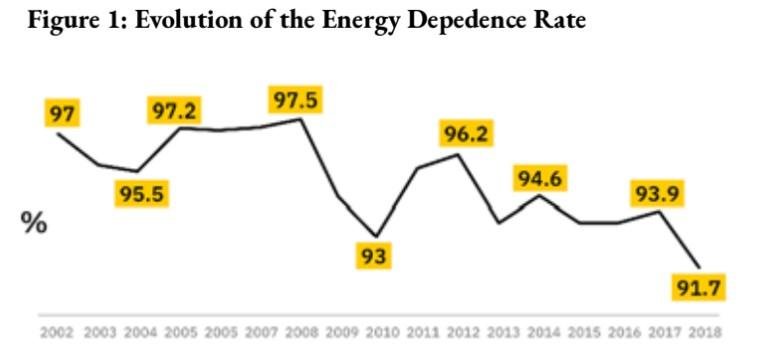
As for the energy mix, progress remains limited. This is clearly reflected in the evolution of energy consumption patterns between 2002 and 2018, as shown in the same document (Table below).
Table: Composition of Energy Consumption by Percentage between 2002 and 2018
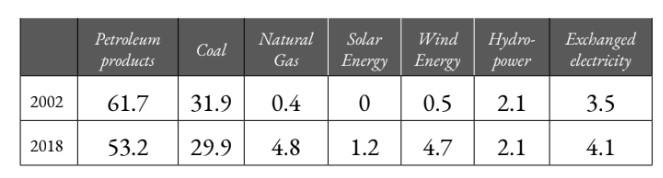
Although the National Energy Strategy set a target of generating 52% of installed electricity capacity from renewable sources by 2030, actual progress remains far behind. By 2022, renewable energy accounted for only 18.1% of installed capacity, according to a report by the National Electricity Regulatory Authority. The situation has even worsened, with a decline of 7.8% compared to 2021. At the same time, the report acknowledged ‘a steady increase in coal use between 2010 and 2022, with an average annual growth rate of 8.5%’.[30]
According to economist Najib Akesbi, renewable energy projects in Morocco ‘have faced repeated delays. Measured against the targets set for 2020, solar energy production capacity reached only 41% of planned levels, while the share of renewables in total electricity production did not exceed 17.8%’.[31]
The Moroccan Alliance for Climate and Sustainable Development (AMCDD) has raised a more operational critique:
Morocco’s energy transition has been driven mainly by the construction of large-scale, high-voltage renewable power plants. Meanwhile, other dimensions of the transition, including decentralised production, access to medium- and low-voltage grids, self-production, and energy efficiency, have lagged significantly due to an ineffective legislative and regulatory framework, as well as limited resources and insufficient funding.[32]
In recent years, Morocco has seen a growing number of investments in renewable energy, particularly in solar power, wind energy and green hydrogen. However, most of these projects are export-oriented and contribute little to building a domestic industrial base. The majority are led either by local companies such as Nareva or by major foreign firms whose projects remain at the feasibility study stage, including France’s TotalEnergies and the UK’s Xlinks.[33] The state has granted these projects tens of thousands of hectares of land to produce clean energy, primarily for export to European markets.[34]
According to Bank Al-Maghrib (2016), the budget required to implement the transition toward a green and inclusive economy is estimated at around 97 billion dirhams (approximately €9.312 billion). Where will this funding come from? Bank Al-Maghrib’s answer is clear: ‘the state will cover roughly one third of the cost, and the financial sector is therefore expected to play a major role’.[35]
Financing development has long been a central challenge in Morocco’s modern economic history. Rather than placing the burden of this financing on the local and foreign bourgeoisie, the state has consistently relied on external borrowing and on increasing the tax burden on popular classes, particularly through direct taxes on consumer goods. Public investment became a key mechanism for nurturing a domestic capitalist class. This took place first through the expansion of the public sector, which served as a ladder for the Moroccan bourgeoisie via public procurement, import-substitution policies, Moroccanisation and protectionism. This was later followed by privatisation policies and various forms of private sector involvement, including delegated management and public–private partnerships. More recently, so-called ‘innovative financing mechanisms’ have emerged, which can be understood as a disguised form of privatisation.[36]
Over the past two decades, under new industrial policies built around the so-called global professions, the state has continued to rely on foreign investment as a qualitative driver of structural transformation, economic diversification and industrial upgrading. As discussed earlier, however, attracting such investment has proven difficult, and it has largely failed to deliver the promised outcomes in terms of industrialisation and technology transfer.
AMCDD has criticised Morocco’s approach to climate finance, stating that ‘the country lacks a comprehensive strategy to finance its national climate commitments and the needs of climate transition at the level of regions and cities. This, according to the coalition, which should be based on diversifying public and private resources, as well as international climate finance instruments’.[37]
Foreign Financing
Once again, Morocco encounters the same structural dilemma in its attempt to seize the ‘opportunity’ presented by green industrial policies, alongside internationally promoted efforts to mitigate and adapt to climate change and to pursue decarbonisation. This logic is stated explicitly in the Long-Term Low-Carbon Strategy 2050, issued by the Ministry of Energy Transition and Sustainable Development in October 2021, which calls for ‘strengthening the country’s international competitiveness by attracting foreign investment, accessing new sources of climate finance, and developing international partnerships’.[38]
As with many of Morocco’s strategies for coping with the fluctuations of the global economy, particularly those affecting its northern neighbour, this approach is not driven solely by environmental concerns. Rather, it is tied to the objective of improving the competitiveness of Moroccan companies in a context where the European Union is increasingly adopting environmental standards. The Long-Term Low-Carbon Strategy ‘aims to stimulate discussions leading to the development of new green value chains in order to enhance the competitiveness of the Moroccan economy, while ensuring decarbonisation and securing a proactive position in export markets’. The strategy explicitly situates this ambition in relation to developments among Morocco’s trading partners, notably the European Green Deal and the African Continental Free Trade Area.[39]
In this sense, the Moroccan economy continues to move in step with the needs and priorities of its northern neighbour, making it possible to interpret the discourse on green transition as a form of green colonialism.
In November 2021, Cluster Solaire,[40] in partnership with the Moroccan Agency for Energy Efficiency and the Ministry of Industry and Trade, published a guide titled Decarbonisation and the Green Economy: A Guide to Financing Programmes and Financial Support for Moroccan Companies.[41] The guide was supported by the International Finance Corporation as part of a project implemented in partnership with Germany’s KfW Development Bank, the Kingdom of Norway and the Dutch Ministry for Foreign Trade and Development Cooperation.
The guide aimed to facilitate access to information and stimulate the green ecosystem. It provides an overview of financing and support schemes tailored to the needs of companies seeking to enhance their competitiveness through investment in the green economy. It also targets entrepreneurs and suppliers of green technologies and services aiming to accelerate industrialisation or bring their solutions to market.
The guide presents a range of financing mechanisms, including financial support from national and international organisations such as the French Development Agency, the European Investment Bank and the European Bank for Reconstruction and Development. It also highlights financing offers from Moroccan financial institutions, including Banque Centrale Populaire, Attijariwafa Bank and Crédit Agricole du Maroc.
However, the main lever expected to finance Morocco’s green transition remains international climate finance, particularly the Green Climate Fund. According to the Morocco 2050 Long-Term Low-Carbon Strategy, Morocco is ‘the first African country with the highest number of entities accredited by the Green Climate Fund’, with four accredited institutions: the Agency for Agricultural Development of Morocco (ADA), the Caisse de Dépôt et de Gestion, Attijariwafa Bank, and the Moroccan Agency for Sustainable Energy. At the time of publication of the Morocco 2050 report, other institutions were undergoing the accreditation process, including Crédit Agricole du Maroc, the Moroccan Agency for Energy Efficiency, the Municipal Equipment Fund, the Energy Engineering Company, and Bank of Africa.
When Morocco submitted its updated NDC on 19 September 2019, committing to a 42% reduction in greenhouse gas emissions by 2030, it announced that 25% of this target was conditional on international support.[42] To implement its NDCs, Morocco estimated its financing needs at US$ 85 billion over the ten-year period from 2020 to 2030, of which US$ 24 billion was explicitly dependent on international climate finance mechanisms.[43]
Nevertheless, Morocco is a small emitter on the global scale, accounting for only 0.2% of global emissions. Even if the country were to reduce its emissions by 90%, the absolute impact would remain marginal. As a result, Morocco’s mitigation efforts are far less attractive to international climate finance, if such funding materialises at all, than large-scale reduction projects or pledges in high-emitting countries such as India or China.
There is considerable criticism concerning the limited commitment of major powers to adequately financing the Green Climate Fund. That is beyond the scope of this study, which focuses on reviewing the Moroccan literature on green public policies and its critiques. The Economic and Financial Report accompanying the 2025 Finance Bill, published by the Ministry of Economy and Finance, notes that
Investor uncertainty remains high in the medium term due to financing difficulties affecting many projects linked to the Climate Fund and the planned transition for the 2025–2026 period. Based on currently announced policies, and despite recent improvements, the International Energy Agency estimates that green investments by 2030 will amount to only half of what is required to achieve carbon neutrality by 2050.[44]
This assessment is echoed in Bank Al-Maghrib’s 2023 annual report, which states that:
Despite the growing visibility of the effects of climate change, there is broad consensus that the world is drifting away from the trajectory set to address this phenomenon. Meetings and commitments continue to multiply, yet few are translated into concrete action, and setbacks are sometimes announced, often justified by so-called exceptional circumstances.
Morocco is thus effectively relying on a financing model that its own official institutions recognise as uncertain and lacking reliability.
Historically, financing has often served as a means through which donors exert control over economic decision-making. It is not in their interest to support the industrialisation of a developing country in ways that would free it from dependency. This dynamic is highlighted in a report published by the École de Guerre Économique under the title Economic Dependence and Industrial Sovereignty in Morocco: Current Situation and Future Prospects. The report points to the influence of the World Bank and the IMF in shaping economic orientations related to industrial development policies. According to the report, ‘their role extends beyond development assistance to actively influencing how developing countries define their economic strategies, thereby granting indirect legitimacy to international actors seeking to leverage their power’. Similar critiques are directed at other financial institutions, such as the European Investment Bank and the European Bank for Reconstruction and Development.[45]
Domestic Financing
Domestic financing also raises significant challenges with regard to its contribution to the transition toward a green economy. In an effort to facilitate access to finance for companies to engage in greening the economy, the Moroccan Capital Market Authority[46] issued guidelines for the development of green and sustainable bonds.[47] In 2016, two green bond issuances were announced, one by the Moroccan Agency for Sustainable Energy and the other by the Moroccan Foreign Trade Bank, with a combined value of approximately 170 million US dollars.[48]
Small and medium-sized enterprises account for more than 95% of companies in Morocco,[49] yet they frequently fail to secure financing at the application stage. Moroccan banks typically impose high interest rates and require substantial collateral.[50]
This situation persists despite the Moroccan banking sector’s public commitments to climate objectives. Banque Centrale Populaire, for example, adopted an Environmental and Social Management System in 2012 to assess investment loans.[51] In 2015, it joined the MorSEFF programme[52] with a budget of 65 million euros. In 2017, the bank issued green bonds totaling 1.5 billion dirhams (approximately €144 million), wholly in foreign currency. In 2019, it received the CGEM corporate social responsibility label and was included in the Vigeo Eiris Best Emerging Markets Sustainability Index for 2018, 2019 and 2020. In addition, Banque Populaire launched a Green Climate Fund project in 2020, aimed at achieving regional accreditation for projects with investments exceeding US$250 million. It also introduced ‘Green Investment by Banque Populaire’, which finances investments linked to the green economy, with the aim of reducing carbon footprints and improving the competitiveness of companies operating in the domestic market as well as those oriented toward export.
Attijariwafa Bank, for its part, obtained accreditation from the Green Climate Fund in 2019 and launched the ‘Green Plan’ initiative to support investment programmes related to sustainable development. These initiatives aim to improve energy efficiency, promote decarbonisation within companies, and protect the environment.[53] However, such measures remain largely symbolic and serve as a means for Moroccan banks to access international finance markets, gain international recognition, and secure corporate social responsibility credentials.
A persistent feature of the Moroccan financial system is the banks’ reluctance to finance the majority of the country’s business sector. This is partly explained by the concentration of banking capital in large holding companies, as well as the continued dominance of foreign capital within the banking sector. According to a study by sociologists and political economists Abdellatif Zeroual and Mohamed Oubenal:
Foreign capital continues to control more than ten financial institutions. By the end of 2012, banks dominated by foreign capital accounted for 19.3% of branches, 18.5% of assets, 21.6% of loans, and 19.4% of deposits … Moreover, foreign capital remains a major shareholder in Morocco’s three largest banks: Banque Centrale Populaire, Attijariwafa Bank, and the BMCE Bank.[54]
This assessment aligns with the conclusions of Akesbi, who has emphasised that ‘loan allocation remains structurally biased in favour of large companies. While very small and medium-sized enterprises continue to face persistent credit shortages, a small minority of large companies receive as much as 61% of the total loans granted’.[55]
Even recent developments, such as the withdrawal of French banks (such as Société Générale) from the Moroccan market for reasons related to profitability and European Central Bank regulatory requirements, have not altered this situation. The market shares previously held by these banks have been taken over by major domestic groups, notably the Saham Group.[56]
As a result, domestic financing in its current form is unlikely to support a genuine green transition in a Moroccan economy where small and medium-sized enterprises account for more than 95% of the economic fabric. While Bank Al-Maghrib (2016) emphasised that financing represents a major challenge, noting that the successful implementation of Morocco’s sustainable development commitments depends on mobilising the necessary resources, it also acknowledged that existing financing initiatives remain fragmented and largely ‘individualistic’.[57]
Consequently, the green financing initiatives outlined above, which primarily target large corporations, are likely to serve a limited function. Rather than enabling a broad-based green transition, they mainly allow large firms to enhance their environmental image and more easily obtain accolades about ‘social responsibility’. That is, they enable the greenwashing of capitalism’s environmentally destructive tendencies.
A Final Note on Financing
A persistent myth promoted by countries of the Global North and their institutions is that the main obstacle to industrialisation in the Global South lies in a lack of capital, and that the solution therefore consists of debt, foreign investment and official development assistance. In reality, it is the Global South that finances the Global North. Wealth flows outward from the South through multiple channels: the repatriation of profits by multinational corporations, external indebtedness, arms purchases, and the conditionality of development aid, which often requires the purchase of goods from indebted countries. Through these mechanisms, Northern economies are able to extract the wealth produced in the South, depriving the latter of the means needed to finance their own economic development. This process is aptly described by Galeano[58] as the ‘draining’ of wealth.
As Ernest Mandel argued: ‘The real difficulty for the industrialisation of developing countries does not consist in a lack of resources – in other words, in lack of money capital – but in the socio-economic conditions which thwart the mobilisation and productive use of the available social surplus product’.[59]
In the Global South, including Morocco, the ruling class refuses to bear the costs of development and industrialisation, even as they readily appropriate their share of wealth and surplus value. Instead, they prefer to act as intermediaries for global capital and to venerate the profoundly unequal international division of labour. Paul Baran captured this dynamic in the following observation:
What is more, the pronounced emphasis on the indispensability of government aid in financing these projects reflects the time-honored notion of business as to what constitutes ‘harmonious cooperation’ between national administrations and monopolistic corporations: the former should shoulder the costs of establishment and conduct of business with as little as possible financial ‘intervention’ of the interested firms, while the latter should reap the profits resulting therefrom with as little as possible financial ‘intervention’ of the public treasury.[60]
What countries of the Global South lack, therefore, is not finance, but a political strategy oriented toward mobilising both money and the existing economic surplus for domestic industrialisation and development. Eric Wolf made a similar point in his analysis of Cuba, noting that what constrained economic growth on the island was not the factors of production themselves, but the way in which those factors were organised.[61]
Alternative ways of organising these ‘factors of production’, however, clash with the interests of those who currently dominate the political arena: the moneyed class that benefits from this state of affairs. Yet the potentially available financial resources are substantial should the state nationalise the banking and insurance sectors, as well as mobilise the considerable financial reserves managed by the state-owned Caisse de Dépôt et de Gestion (Deposit and Management Fund). This institution alone allocated more than 20 billion dirhams (approximately €1.92 billion) to transport and sports infrastructure projects in line with preparations for hosting the 2030 World Cup,[62] while managing massive deposits and planning to increase its assets by 31% to reach 210 billion dirhams (approximately €20.16 billion) by 2030.[63] Other institutions could also play a central role in financing a green industrial policy, such as the Municipal Equipment Fund, which since its creation in 1959 has contributed 70 billion dirhams (approximately €6.72 billion) in loan commitments and over 60 billion dirhams (approximately €5.76 billion) in payments.[64]
Additional financial resources could be mobilised through migrant remittances, which reached 93 billion dirhams (approximately €8.928 billion) in 2025, through the suspension of payments on illegitimate debt, and through progressive taxation on wealth and property. Morocco’s external public debt alone stood at 468 billion dirhams (approximately €44.928 billion) in 2024.[65] Further measures could include the reinstatement of customs protection and the recovery of smuggled capital, estimated at nearly 16.6 billion US dollars between 2013 and 2014,[66] and at 41 billion dollars between 2004 and 2013.
All of these proposals, however, run counter to the interests of the ruling classes in Morocco. They favour financing mechanisms whose burden does not fall on the moneyed class, opting instead for solutions that preserve existing power relations while presenting them as technical or unavoidable necessities.
Alongside the financing dilemma, technology represents another major obstacle to industrialisation, particularly green industrialisation and the transition toward a low-carbon economy. Over the past 70 years, the country’s development followed a dependent capitalist model, including three decades of neoliberal liberalisation, have left the country without a solid industrial technological base. As a result, Morocco has become heavily reliant on foreign capital, with the expectation that technology transfer would occur in exchange for the extensive incentives granted by the state.
This assumption is reflected in the Morocco 2050 Long-Term Low-Carbon Strategy, which states that ‘the international arena is both a source of uncertainty and risk, but also a source of opportunity due to international finance, technology transfer, and technical expertise. These resources must be mobilised and maximised through a proactive national approach, an approach that Morocco has already begun implementing’.[67]
Official policy documents clearly acknowledge the scale and significance of the technological challenge, particularly in reports produced by the Royal Institute for Strategic Studies[68] and the Economic, Social and Environmental Council,[69] both of which have devoted extensive analyses to ‘the Fourth Industrial Revolution (Industry 4.0)’.
To facilitate technology transfer, the state adopted industrial offset mechanisms[70] under the Industrial Acceleration Plan (2014–2020), making them a condition of public procurement contracts. These mechanisms were incorporated into the public procurement reform package introduced by the Moroccan government in 2014 and apply to sectors such as defence and security, industry, energy, and advanced technologies. Their stated objective is to increase local content in investments linked to contracts between the state and private investors.[71] As noted in a document published by the Royal Institute for Strategic Studies in 2014, Industrial offsets have become a central tool of economic development policy, with their use expanding significantly and becoming widespread since the 1980s’.[72]
As of 2014, the Moroccan state made industrial offset requirements a general condition for all public procurement contracts exceeding a certain threshold. For example, the contracts launched by the Moroccan Agency for Sustainable Energy require a local integration rate of 30%. And Alstom committed to sourcing up to 6 billion dirhams (approximately €576 million) from Moroccan railway companies out of a total project cost of 20 billion dirhams (approximately €1.92 billion), representing a local integration rate of roughly 33%. Despite these commitments, the Royal Institute for Strategic Studies considers Morocco’s implementation of industrial offset mechanisms inadequate.[73]
Structural constraints impede ambitions for domestic technological transformations. On the one hand, Morocco’s business sector is deeply fragmented, with more than 95% of firms classified as small and medium-sized enterprises. These firms generally lack the financial and organisational capacity needed to acquire or develop advanced technologies. On the other hand, the monopolistic position of large corporations, particularly public enterprises and companies owned by the royal family, allows them to accumulate profits and returns without the need to localise technology, relying instead on purchasing it externally.
Additionally, competition among countries of the Global South to attract foreign investment encourages Morocco to favour turnkey projects,[74] in which foreign capital controls all stages of design, construction and implementation. Moroccan enterprises, especially small and medium-sized ones, are largely confined to subcontracting roles such as the provision of security or transport services. Large Moroccan capital, meanwhile, secures its position through partnerships with foreign investors.
These turnkey projects impose high costs on the Moroccan economy, while equipment suppliers amass profits as a result. A prominent example is the Noor Ouarzazate solar complex, which was largely financed by the World Bank and Germany’s KfW Development Bank, and built using concentrated solar power technology. According to Najib Akesbi, ‘the German development bank actively defended the interests of equipment manufacturers and even diplomatically thwarted attempts to demand higher levels of local integration’.[75] Since becoming operational in 2016, the project has generated an annual deficit of approximately 80 million euros, covered by public finances.[76]
China’s experience is often cited as an example of successful technology transfer through foreign investment. However, this was largely driven by Beijing’s requirement that foreign firms transfer technology as a condition of market access. Although US companies expressed reservations, compliance with these policies was the price of access to China’s vast supply of low-cost labour.[77] Morocco lacks the conditions that enabled China to pursue such a strategy. The Moroccan state does not have the same degree of autonomy, nor does the country possess a market or workforce comparable in scale to China’s.
More fundamentally, one of the main obstacles lies in the nature of the Moroccan bourgeoisie itself. It has largely developed through speculation and the commercialisation of foreign brands, with little inclination toward investing in technologically advanced industrial sectors. This is compounded by the absence of a national bourgeois project comparable to that of countries such as Turkey, let alone China.
Technological development cannot be reduced to the transfer of technology from abroad. It requires a long-term strategy centred on research, scientific training and technical capacity building. Such a strategy is rarely on the agenda in countries like Morocco, as it runs counter to the interests of the dominant classes and, at the same time, is unlikely to be tolerated by countries of the Global North. What is therefore required is a radical transformation in social and class relations. As Galeano put it, such a shift ‘requires and promotes deep changes in all existing structures’.[78]
A similar argument is made by Piveteau, Askour and Touzani, who caution that ‘focusing industrial takeoff strategies on competitiveness as revealed by external markets should not obscure a fundamental reality: technological progress and competitiveness are internal processes that are difficult to transfer. They are the result of social and political dynamics, rather than mere differences in factors of production.’[79]
Morocco, therefore, lacks any real leverage that would compel advanced economies to share technology. The only remaining path is what Mohamed Naji, Professor at the Hassan II Institute of Agronomy and Veterinary Medicine, described when he challenged state claims that normalisation with the genocidal entity of Israel would lead to technology transfer. According to Naji, the only mechanism at work is that of the market. As he explains: ‘there is no genuine technology transfer; it is a myth. There is rather a commercial transaction in which technology is sold along with instructions for its use and maintenance. What is not provided is access to the knowledge needed to strengthen technological capabilities or to develop independent technologies’.[80]
Naji’s argument echoes Galeano’s observation about Latin America. Galeano noted that: ‘modern technology is received as railroads were received in the past century, at the service of foreign interests which model and remodel the colonial status of these countries’.[81]
Samir Amin had already pointed out that the old form of global polarisation between centres and peripheries, which coincided with the divide between industrialised and non-industrialised countries, was transformed by socialist revolutions and national liberation movements that integrated peripheral societies into processes of industrial modernisation. According to Amin, this older pattern of polarisation has been replaced by a new one structured around five monopolies, one of which is the monopoly over technology.[82]
3. Non-Official Literature on Green Public Policies
3.1. The General Confederation of Moroccan Enterprises (CGEM)
The General Confederation of Moroccan Enterprises (CGEM) published a guide titled Moroccan Climate Business Initiative: Issues, objectives, strategic pillars, and the 2017–2018 Implementation Plan,[83] which outlines the organisation’s vision of how Moroccan companies should engage with climate objectives.
The guide begins by identifying the challenges that climate change poses to the private sector, while simultaneously highlighting the allure of what it terms the ‘climate market’. It notes, for example, that ‘implementing the Paris Agreement represents a global market valued at more than 13.5 trillion dollars for the energy sector alone by 2030’. The document concludes with a set of recommendations, including:
- encouraging the integration of climate-related risks and opportunities into the development strategies of Moroccan companies;
- proposing concrete technical, technological and financial solutions that companies can implement in mitigation and adaptation efforts;
- supporting the emergence of a national green economy, with expected spillover effects across the wider African continent;
- supporting and rewarding corporate climate commitments through the signing of a Climate Charter and, in the medium term, the introduction of a climate label.
On the sidelines of the twenty-second Conference of the Parties to the UNFCCC (COP22) in Marrakech in 2016, CGEM launched the Moroccan Corporate Climate Initiative.[84] Within this framework, the Professional Association of Cement Manufacturers in Morocco[85] adopted several measures, including prioritising wind energy as a primary option for meeting companies’ electricity needs.
Despite these initiatives, competitiveness remains CGEM’s primary concern, consistently ranked above environmental considerations. This hierarchy of priorities is reinforced by statements found in official green policy literature, which emphasise the need to ‘assess the risks and opportunities of a comprehensive green transition for industry, particularly with regard to Morocco’s competitiveness’. Such documents warn that ‘environmental requirements may constitute significant obstacles and constraints on the competitiveness of Moroccan industry’.[86]
Environmental standards thus come to be framed as barriers to competitiveness, relegating ecological considerations to a secondary position.
3.2. Associations and Trade Unions
Official literature on green public policies in Morocco acknowledges the important role of civil society in the country’s green transition. This emphasis on civil society participation must be contextualised within broader reforms of Moroccan legislation aimed at aligning with the neoliberal orientation adopted since the 1980s and 1990s. The 2011 Constitution, in particular, redefined the state as one actor among many responsible for ensuring national development, including sustainable development. As stated in official documents: ‘the challenges of this transition are significant and multifaceted, and the state lacks the resources, capacities, and position to manage Morocco’s transition toward an inclusive green economy on its own … Civil society actors in Morocco can help accelerate the transition, provided they have the necessary vision and resources’.[87]
In practice, however, these calls for civil society participation collide with the authoritarian structure of the state. As a result, participation remains limited, symbolic, and largely formal, confined to small-scale local initiatives. It tends to involve associations that seek access to funding and align themselves with the state’s narratives. In the context of drafting a new development model, the royal commission tasked with this mission acknowledged in its April 2021 report[88] that citizen participation remained limited. The report attributed this to ‘weak participation channels, difficulties in accessing those channels, and restricted access to data and information’.
This pattern was also evident in 2016, when Morocco hosted COP22 in Marrakech. During that event, the Democratic Network for Monitoring COP22 was excluded from participation after expressing views opposing the state’s official position on climate and environmental issues.[89]
ATTAC Morocco
ATTAC Morocco has engaged with environmental issues since its founding in the early twenty-first century. In the context of Morocco’s hosting of COP22)in 2016, the association organised an international symposium under the slogan ‘Change the capitalist system, not the climate’. Through this initiative, ATTAC Morocco criticised the COP process since 1997, which it described as relying on ‘the market to monitor carbon emissions’. It characterised the climate COPs as forums where governments and corporations meet to strike deals, largely detached from genuine concern over rising global temperatures.
ATTAC Morocco stated: ‘what is needed are necessary alternatives to the fraudulent solutions promoted under the banner of the green economy, which seek to turn the climate crisis into a new field for profit-making’. According to ATTAC Morocco:
Genuine solutions lie in establishing an alternative societal model based on new ways of producing, consuming, housing, eating, and living, grounded in respect for nature. We must demand the immediate implementation of urgent measures, including halting the extraction of fossil fuels, reorienting production and consumption toward local needs, and protecting public lands. There are indeed many alternatives.[90]
ATTAC Morocco’s engagement with environmental and climate issues did not begin with COP22, nor is it limited to that moment. These concerns lie at the core of the association’s political orientation. According to Omar Aziki of ATTAC Morocco:
Its analysis of the environmental and climate crisis, as well as the strategies needed to address it, was first articulated in the programmatic platform adopted at its Fourth National Conference held in January 2012, and later updated at its Fifth Conference in March 2014. This platform examined the environmental situation in Morocco and critically assessed so-called green projects, which it viewed as new opportunities for accumulation under the pretext of environmental protection. It called for abandoning the illusion that environmental protection can be achieved through market mechanisms or so-called green capitalism, and instead advocated engagement in the global movement for climate justice and for genuine alternatives to the ecological crisis.[91]
Moroccan Association of Green Economy for Environment and Climate Justice
The Moroccan Association of Green Economy for Environment and Climate Justice is an independent, non-profit civil society organisation founded in 2012. Its stated mission is to safeguard the right of present and future generations to a healthy and sustainable environment.
The association builds strategic partnerships with a range of actors, including funding institutions, government bodies, civil society organisations and the private sector. On 6 March 2024, it participated in the launch conference of the Just Transition Project in Rabat. According to a report on the association’s activities, the conference focused on ‘economic incentives for a successful climate policy and the implementation of an urban development network’. The report notes that the conference was organised as a joint initiative involving the Kingdom of Morocco, the European Union, and the Federal Republic of Germany.[92]
The Moroccan Alliance for Climate and Sustainable Development (AMCDD)
In August 2021, the Moroccan Alliance for Climate and Sustainable Development (AMCDD) published a document titled White Paper[93] on aligning Morocco’s public policies and post–COVID-19 recovery plans with ‘the objectives of the Paris Agreement and the requirements of sustainable and resilient development’. The coalition presented the document as an ‘effective contribution to strategic projects that will shape Morocco’s future over the coming decade (2020–2030) … particularly by proposing ways to redefine national priorities and future public policy choices in order to take the urgency of climate action seriously’.
The White Paper was developed by members of AMCDD, with support from Morocco’s Climate Change Competence Centre (4C Morocco) and the UNDP-supported project Operational Support to the 4C Centre, in coordination with the 4C Civil Society and NGOs Platform.
The document outlines the Alliance’s proposals on green industrialisation, including ‘accelerating energy efficiency efforts in industry through the installation of high-performance equipment and process optimisation’. It identifies ‘renewable energy as a suitable foundation for industrial decarbonisation’. The coalition also advocates for a fiscal framework conducive to the transition, calling for an end to fossil fuel subsidies and the introduction of a green tax system, including carbon pricing and investment-related incentives.
The coalition has also produced papers addressing sector-specific issues such as participatory democracy, sustainable cities, coastal zones, water, energy, climate, and biodiversity.
Trade Unions
‘There are no jobs on a dead planet’. Ensuring that ‘global temperature rise remains below 2°C, and striving for 1.5°C, will not be achieved unless concrete measures are taken to radically transform patterns of production and consumption, and unless national emissions reduction targets, particularly in advanced countries, are revised upward with greater ambition before 2018’. This position was articulated in the declaration of the International Trade Union Confederation at COP22 in Marrakech in 2016.[94]
Does a comparable level of interest exist among the leadership of the Moroccan trade union movement? A review of Moroccan trade union literature on green public policies suggests not. For decades, trade union leaders have been keen to keep the workers’ movement an appendage to state policies, adopting what they describe as a ‘participatory approach’ while prioritising the ‘competitiveness of Moroccan enterprises’. Their demands have largely focused on safeguarding the rights of employees and workers they represent.
At the height of the COVID-19 pandemic, when the state imposed a lockdown and established the Economic Watch Committee, state efforts focused on creating the conditions for an economic recovery largely oriented toward the private sector. After being excluded from this committee, trade union leaders called for the creation of a Social Watch Committee, framed primarily around addressing the material and professional interests of the workers they represent. Beyond this demand, however, the trade union movement did not articulate an independent perspective on the management of the pandemic or its aftermath.
In practice, Moroccan trade unions have defended the interests of organised sections of the working class and civil servants, while overlooking non-organised segments of the working class, workers in the informal sector, and millions of people living in poverty. These groups have instead been addressed through what the state refers to as ‘social protection’, a form of public charity based on targeted and temporary cash transfers to poor households. Abject poverty, combined with the trade union movement’s lack of engagement with them, places these social groups outside the sphere of the environmental awareness needed to exert pressure on both the state and capital to commit to a genuine green transition.
Trade unions remain notably silent with regard to green industrial policies. The most representative unions in the sectors identified in official policy literature as the spearhead of Morocco’s green transition – the Democratic Confederation of Labour in phosphates and the Moroccan Workers’ Union in energy – have articulated no clear stance on these issues.
This situation unfolds at a moment when workers are at the very centre of the green transition promised by green industrial policies. According to Amir Lebdioui,[95] such a transition means that ‘workers can adapt and transfer from areas of decreasing employment to other industries, notably by acquiring green skills, which are needed to adapt and develop products, services, and processes to support a sustainable and resource-efficient society’. However, Al-Badawi warns that this approach carries risks, such as:
(i) temporal misalignments when job losses precede job gains at a larger scale (e.g. closure of a coal plant preceding new activities in renewable energy); (ii) spatial misalignments, when new jobs are emerging in communities or regions other than those that lose jobs; (iii) and educational misalignments (also called skill mismatches), when the skill levels or the occupations required under the energy transition were not developed or needed under the previous energy system.[96]
In the context of a weak Moroccan trade union movement and its lack of engagement with environmental issues and green industrial policies, workers are likely to bear the costs and shoulder the consequences of this situation. A telling precedent is the closure of the coal mines in Jerada, in eastern Morocco, in 1998.[97] This decision resulted in the dismissal of around 5,000 workers and plunged the town into deep poverty. In 2018, one year after the repression of the Hirak movement in the Rif region in northern Morocco, Jerada witnessed a large-scale popular uprising,[98] which was also met with brutal repression.
The Jerada mines were not closed for environmental reasons, but for reasons of economic profitability. Imported coal had become cheaper than coal extracted locally, and social costs and considerations of justice for this marginalised region were never taken into account. This was compounded by the state’s decision to cancel the annual subsidy of 80 million dirhams (approximately €7.68 million) granted to the National Office of Electricity, the sole client of the Jerada coal company.[99] Coal remains underground to this day, while the population was abandoned without alternatives. The black slag heaps still visible at the entrance to the town, which also contain coal and other minerals, continue to be carried by the wind into the city, standing as a lasting reminder of a transition carried out without social justice.
A strong trade union movement with genuine environmental awareness is a necessary and indispensable condition for green industrial policies and for ensuring a just green transition. It is the key safeguard against the risk highlighted by Amir Lebdioui, who warns that ‘some of the existing green industrial policy strategies leave ample opportunity for elite enrichment at the expense of workers’.[100]
At the height of the COVID-19 pandemic and the economic lockdown, Moroccan trade union leaders repeatedly invoked the need for a ‘new deal’ or a ‘new social contract’, drawing implicit parallels with the post–Great Depression New Deal in the United States, the welfare states that emerged after the Second World War, and the developmental states formed in the wake of decolonisation. What these references tend to overlook, however, is that such ‘deals’ and social compromises were not the result of choices made by the ruling class or achieved through consensual political agreements. Rather, they were the outcome of intense political and militant struggle that forced the dominant classes to make major concessions in order to avert the rise of a revolutionary tide.
The central role of the working class, together with millions of small-scale food producers, follows directly from this historical lesson. As outlined above, the dominant segments of the economic elite, and the ruling monarchical power acting in their name, have no real interest in the country’s genuine industrialisation. At the same time, the middle bourgeoisie lacks the capacity to push the ruling bloc toward such a project. Its primary objective is instead to secure access to public finances in order to improve its position in the face of international competition.
Ali Amouzai
- This article is adapted from the study entitled “Green Industrialisation in Morocco”. It was originally published under the title “An Overview of Green Public Policies in Morocco”
[1] Kingdom of Morocco. Fifty Years of Human Development and Prospects for 2025.
[2] Akesbi. The Moroccan Economy under a Glass Ceiling, p. 152.
[3] A World Bank Group report notes that 15% of Morocco’s exports to the European Union originate from sectors that will fall under the EU’s Carbon Border Adjustment Mechanism. See: Gatti et al. Shifting Gears: The private sector as an engine of growth in the Middle East and North Africa?
[4] Alami, I., DiCarlo, J., Rolf, S. and Schindler, S. (4 February 2025) ‘The New Frontline: The US–China battle for control of global networks‘. Transnational Institute. https://www.tni.org/en/article/the-new-frontline.
[5] Ministry of Energy Transition and Sustainable Development of Morocco. Morocco 2050: Long-Term Low-Carbon Development Strategy.
[6] Ministry of Energy Transition and Sustainable Development of Morocco. (2022). Morocco National Adaptation Plan 2022–2030. https://unfccc.int/documents/636730.
[7] Committee for the Drafting of the New Development Model (2021) The New Development Model: Unlocking Potentials and Restoring Trust to Accelerate Development and Progress and Achieve Well-Being for All – General Report, https://www.fichier-pdf.fr/2021/09/04/–/
[8] Ministry of Energy Transition and Sustainable Development of Morocco. Morocco 2050: Long-Term Low-Carbon Development Strategy.
[9] Committee for the Drafting of the New Development Model. The New Development Model.
[10] Government of Morocco. (2021) Updated Nationally Determined Contribution. https://unfccc.int/sites/default/files/NDC/2022-06/Moroccan%20updated%20NDC%202021%20_Fr.pdf
[11] Ministry of Economy and Finance of Morocco. (2025) Report on Public Institutions and State-Owned Enterprises. In Draft Finance Law for 2026. https://www.finances.gov.ma/fr/vous-orientez/Pages/plf2026.aspx
[12] Ministry of Energy Transition and Sustainable Development. Morocco National Adaptation Plan 2022–2030.
[13] Kingdom of Morocco and United Nations Morocco. (2023) United Nations Sustainable Development Cooperation Framework 2023–2027. https://morocco.un.org/fr/232698-cadre-de-coopération-pour-le-développement-durable-pour-la-période-2023-2027
[14] World Bank Group. How Can the Private Sector Boost Growth in the Middle East and North Africa?
[15] Government of Morocco. Updated Nationally Determined Contribution.
[16] OCP Group Website (15 December 2022), ‘OCP Group Launches Its Green Investment Programme for the Period 2023–2027. https://www.ocpgroup.ma/ar/news/ocp-group-launches-13-billion-green-investment-strategy
[17] World Bank Group. (2022) Morocco Country Climate and Development Report. https://www.worldbank.org/en/country/morocco/publication/morocco-country-climate-and-development-report
[18] Ministry of Energy Transition and Sustainable Development of Morocco. Morocco 2050: Long-Term Low-Carbon Development Strategy.
[19] UNCTAD. Trade and Development Report 2021.
[20] Benabdellah, Y. (5 September 2022) ‘The Green Ammonia Pilot Project Opens Major Prospects for Morocco’. Medias24.
https://medias24.com/2022/09/04/le-projet-pilote-de-production-dammoniac-vert-ouvre-de-grandes-perspectives-pour-le-maroc/
[21] Benabdellah. ‘The Green Ammonia Pilot Project Opens Major Prospects for Morocco’.
[22] Benabdellah. ‘The Green Ammonia Pilot Project Opens Major Prospects for Morocco’.
[23] Benabdellah. ‘The Green Ammonia Pilot Project Opens Major Prospects for Morocco’.
[24] Diouf, A. (4 December 2025) ‘OCP Green Investments: The African Development Bank Deploys Its New Guarantee Instrument’. L’Economiste.
https://www.leconomiste.com/ocp-investissements-verts-la-bad-deploie-son-nouvel-instrument-de-garantie/
[25] Morocco Court of Accounts (Cour des Comptes). ‘Presentation’.
The Court of Accounts is a constitutional body responsible for exercising the highest level of oversight over the implementation of financial laws. It assists Parliament and the government within the scope of its legal mandate and submits reports on its activities to the King as part of its annual reporting.
https://www.courdescomptes.ma/ar/تقديم-2/
[26] Amouzai. Critical Raw Minerals in Morocco.
[27] Berahab, R., and Uri D. (2021) Morocco at COP26’. Rabat: Policy Center for the New South.
https://www.policycenter.ma/publications/le-maroc-a-la-cop26
[28] Moustakbal, J. (2023) ‘The Moroccan Energy Sector: A permanent dependence’. In, Hamouchene, H. and Sandwell, K. Dismantling Green Colonialism: Energy and climate justice in the Arab Region. London and Las Vegas: Pluto Press.https://www.tni.org/en/publication/dismantling-green-colonialism
[29] Ministry of Energy, Mines, and Environment (2019, Key Figures for the Energy Sector: 2019 Edition, High Commission for Planning Website. http://www.abhatoo.net.ma/page-principale/معلمة-نصية/التنمية-الإقتصادية-والإجتماعية/التنمية-الإقتصادية/الطاقة-والمعادن/الطاقة-والمعادن-عموميات/أرقام-أساسية-لقطاع-الطاقة-طبعة-سنـة-2019
[30] National Electricity Regulatory Authority. 2022. Annual Report 2022.
http://www.abhatoo.net.ma/page-principale/معلمة-نصية/التنمية-الإقتصادية-والإجتماعية/التنمية-الإقتصادية/الطاقة-والمعادن/الطاقة-الكهربائية/التقريـر-السنـوي-2022-الهيئة-الوطنية-لضبط-الكهرباء
[31] Akesbi. The Moroccan Economy under a Glass Ceiling.
[32] Moroccan Alliance for Climate and Sustainable Development (AMCDD). August 2021. White Paper: Civil Society Advocacy for Aligning Morocco’s Public Policies and Post–COVID-19 Recovery Plan with the Objectives of the Paris Agreement and the Requirements of Sustainable and Resilient Development.
https://www.lodj.ma/attachment/2196682/
[33] Amouzai, A. (13 August 2025). ‘Spotlight on the Xlinks Morocco Project’. The Ecologist.
https://theecologist.org/2025/aug/13/spotlight-xlinks-morocco-project
[34] Amouzai, A. and Haddioui, O. (2023( Green Hydrogen in Morocco: Just Transition or Greenwashing Neocolonialism? The Case of Guelmim–Oued Noun. AmsterdamL Transnational Institute.
https://www.tni.org/en/publication/green-hydrogen-in-morocco-just-transition-or-greenwashing-neocolonialism
[35] Bank Al-Maghrib. Roadmap for Aligning Morocco’s Financial Sector with Sustainable Development.
[36] Seddiki, Abdel Salam. 19 September 2024. ‘Innovative Financing: Privatization Disguised Without Saying Its Name’, Al-Omq Moroccan Website.
https://al3omk.com/965989.html
[37] AMCDD. White Paper.
[38] Ministry of Energy Transition and Sustainable Development. Morocco 2050 Long-Term Low-Carbon Strategy.
[39] Ministry of Energy Transition and Sustainable Development. Morocco 2050 Long-Term Low-Carbon Strategy.
[40] Cluster Solaire is an association that brings together key actors in the solar energy sector. It presents itself as an innovative and ambitious platform working to develop a competitive industrial base in solar energy, in line with the objectives of the NOOR Solar Plan launched by King Mohammed VI in 2009.
https://www.devex.com/organizations/cluster-solaire-121002
[41]General Confederation of Moroccan Enterprises, Morocco Climate Business Initiative (IECM): Issues, Objectives, Strategic Axes, Implementation Plan 2017–2018, High Commission for Planning Website, http://www.abhatoo.net.ma/maalama-textuelle/developpement-economique-et-social/developpement-economique/environnement/politique-de-l-environnement/initiative-entreprises-climat-maroc-iecm-enjeux-objectifs-axes-strategiques-plan-de-mise-en-oeuvre-2017-2018
[42] Secretary of State to the Minister of Energy, Mines and Sustainable Development. (2019) Guide to Accessing Climate Finance: For territorial actors.
https://eci.ma/documents/32/GUIDE_DACCES_A_LA_FINANCE_CLIMAT.pdf
[43] Secretary of State to the Minister of Energy, Mines and Sustainable Development. Guide to Accessing Climate Finance.
[44] Ministry of Economy and Finance. Draft Finance Law for 2025.
[45] Bennis, A., Traore Tenena, I., El Yamani, M. and Balde, O. (7 February 2023) ‘Economic Dependencies and Morocco’s Industrial Sovereignty: Current Situation and Future Prospects’. École de Guerre Économique.
https://www.ege.fr/infoguerre/dependances-economiques-et-souverainete-industrielle-du-maroc-etat-des-lieux-et-perspectives
[46] Ministry of Energy Transition and Sustainable Development. Morocco 2050 Long-Term Low-Carbon Strategy.
[47] Green and sustainable bonds are debt instruments representing fixed-income investments intended to finance projects with positive environmental and social impacts. They differ from conventional bonds in that their proceeds are exclusively earmarked for such projects. Green bonds are typically used to finance specific environmental projects, such as renewable energy or clean transport, while sustainable bonds are linked to broader sustainability objectives that may not be tied to a single project.
[48] Bank Al-Maghrib (14 November 2016) Press Conference Presenting the Financial Sector Roadmap for Contributing to Sustainable Development and Combating Climate Change.
https://www.bkam.ma/ar/content/download/413806/3379378/Allocution%20de%20MLW%20-%20AR.pdf
[49] Ghoufrane, Boubrahimi and Diani. Industrialisation and Morocco’s Global Competitiveness.
[50] Royal Institute for Strategic Studies. (2023) Industry of the Future, or X.0: Public Version.
https://www.ires.ma/fr/publications/actes-des-seminaires/lindustrie-du-futur-ou-x0
[51] Cluster Solaire, AMEE and the Ministry of Industry and Trade1. Decarbonisation and the Green Economy.
[52] MorSEFF (Morocco – Sustainable Energy Efficiency Financing Facility)is a €110 million sustainable energy financing line for private Moroccan companies in the sustainable energy sector. The programme was developed by the European Bank for Reconstruction and Development (EBRD), in cooperation with the European Investment Bank (EIB), the French Development Agency (AFD), and the German Development Bank (KfW). Local distribution is handled by partner banks such as BMCE Bank (and its subsidiary Bank of Africa) and Banque Centrale Populaire.
https://ebrdgeff.com/morocco-geff/francais-morocco-sustainable-energy-efficiency-financing-morseff-programme/
[53] Cluster Solaire, AMEE and the Ministry of Industry and Trade1. Decarbonisation and the Green Economy.
[54] Mohamed, O. and Zeroual, A. (2017) ‘Transformation of the Financial Structure of Moroccan Capitalism’. Moroccan Journal of Political and Social Sciences 12(XIII) 137–160.
[55] Akesbi. The Moroccan Economy under a Glass Ceiling.
[56] Chahid, S. (14 April 2024) ‘Sale of SGMB: Why French Banks Are Leaving Morocco’. L’Opinion.
https://www.lopinion.ma/Cession-de-la-SGMB-Pourquoi-les-banques-francaises-quittent-le-Maroc-INTEGRAL_a52821.html
[57] Bank Al-Maghrib. Roadmap for Aligning Morocco’s Financial Sector with Sustainable Development.
[58] Galeano, E.The Open Veins of Latin America.
[59] Mandel, E. (1967) ‘Marx’s Theory of Primitive Accumulation and Industrialisation of the Third World’. International Institute for Research and Education.
https://www.iire.org/node/1043
[60] Baran, P. (1957) The Political Economy of Growth. New York: Monthly Review Press, p. 334.
[61] O’Connor, James, 1964, ‘On Cuban Political Economy’, Political Science Quarterly, Vol. 79, 233–247, https://doi.org/10.2307/2146064, cited in Wolf, E.R. (1969). Peasant Wars of the Twentieth Century. New York: Harper and Row, p. 259.
[62] Ministry of Economy and Finance (Morocco). Report on Public Institutions and State-Owned Enterprises. Included in the Draft Finance Law for 2026.
https://www.finances.gov.ma/fr/vous-orientez/Pages/plf2026.aspx
[63] Council of the Moroccan Community Living Abroad (CCME). 3 November 2025. ‘Remittances of Moroccans Living Abroad Continue to Rise’.
https://www.ccme.org.ma/ar/تحويلات–مغاربة–العالم–تواصل–الارتفاع-2/
[64] Ministry of Economy and Finance. Report on Public Institutions and State-Owned Enterprises.
[65] Ministry of Economy and Finance (Morocco). Draft Finance Law for 2026: Report on Public Debt.
[66] El Gazi, K. (27 December 2021( ‘Report: Massive Figures for the Smuggling of Moroccan Funds Abroad—Where Is the Law?’. Al Ousboue.
https://www.alousboue.ma/76298/
[67] Ministry of Energy Transition and Sustainable Development. Morocco 2050 Long-Term Low-Carbon Strategy.
[68] Royal Institute for Strategic Studies. The Industry of the Future, or X.0: Public Version.
https://www.ires.ma/fr/publications/actes-des-seminaires/lindustrie-du-futur-ou-x0
[69] Economic, Social and Environmental Council (CESE). 2017. Changing the Current Model to Build a Dynamic Industry in the Service of Inclusive, Equitable, and Sustainable Development.
https://www.cese.ma/ar/docs/تغيير-النموذج-المعتمد-من–أجل-بناء-صناع/
[70] Industrial offset is a contractual mechanism that allows the purchasing authority to require economic compensation in return for a procurement contract. Through industrial offset policies, states can impose compensatory obligations on suppliers in the context of large-scale public procurement. These obligations are typically defined as a percentage of the contract’s total value and are intended to support domestic economic development. Industrial offsets can take various forms, including the purchase of goods or services from local firms, direct investment, or technology transfer.
[71]CESE. Changing the Current Model to Build a Dynamic Industry in the Service of Inclusive, Equitable, and Sustainable Development.
[72] Ghoufrane, Boubrahimi and Diani. Industrialisation and Morocco’s Global Competitiveness.
[73] Ghoufrane, Boubrahimi and Diani. Industrialisation and Morocco’s Global Competitiveness.
[74] These are commonly known as Engineering, Procurement, and Construction (EPC) contracts. This type of contract is widely used in the construction and engineering sectors, particularly for large-scale infrastructure projects such as power plants. Under EPC arrangements, a single contractor, usually a major engineering firm, is responsible for all phases of the project: engineering and design, procurement and supply of materials and equipment, and construction. These contracts are also referred to as ‘turnkey contracts’, as the project is delivered to the owner complete and ready for operation upon handover.
See: Amouzai. Critical Raw Minerals in Morocco.
[75] Akesbi. The Moroccan Economy under a Glass Ceiling.
[76] Hamouchene, H. (14 October 2022). ‘The Energy Transition in North Africa: Neoliberalism again!’. Transnational Institute.
https://www.tni.org/en/article/the-energy-transition-in-north-africa
[77] Bello, W. (27 October 2022) ‘Will China Replace the U.S. — Or Will the Two Powers Stalemate?’ Foreign Policy in Focus.
https://fpif.org/will-china-replace-the-u-s-or-will-the-two-powers-stalemate/
[78] Galeano. The Open Veins of Latin America, p. 245.
[79] Piveteau, Askour and Touzani. ‘L’industrialisation au Maroc’
[80] Naji, M. (16 January 2025). ‘Unprecedented information… Dr Mohamed Naji reveals the Zionist infiltration in the higher education sector in Morocco’. Howiyapress via YouTube.
https://www.youtube.com/watch?v=t53VKgPMq4g
[81] Galeano. The Open Veins of Latin America, p. 245.
[82] Amin, S. 2002. The Political Economy of Development in the Twentieth and Twenty-First Centuries. (Trans F.S. El-Din. Beirut: Dar Al-Farabi.
[83] General Confederation of Moroccan Enterprises (2017) Morocco Climate Business Initiative (IECM): Issues, Objectives, Strategic Axes, Implementation Plan 2017–2018, High Commission for Planning Website. http://www.abhatoo.net.ma/maalama-textuelle/developpement-economique-et-social/developpement-economique/environnement/politique-de-l-environnement/initiative-entreprises-climat-maroc-iecm-enjeux-objectifs-axes-strategiques-plan-de-mise-en-oeuvre-2017-2018
[84] Ministry of Energy Transition and Sustainable Development. Morocco National Adaptation Plan 2022–2030.
[85] Ministry of Energy Transition and Sustainable Development. Morocco National Adaptation Plan 2022–2030.
[86] Ministry of Energy Transition and Sustainable Development and PAGE. Morocco’s Transition to a Green Economy.
[87] Ministry of Energy Transition and Sustainable Development and PAGE. Morocco’s Transition to a Green Economy.
[88] Committee for the Drafting of the New Development Mode. The New Development Model
[89] Democratic Network for Monitoring COP22 (3 November 2016), Statement – The Democratic Network Decides to Boycott the COP22 Conference. ATTAC Morocco Website. https://attacmaroc.org/الشبكة-الديموقراطية-تقرر-مقاطعة-مؤتم/
[90] ATTAC Morocco. (11 October 2016) ‘ATTAC Morocco Organises an International Conference under the Slogan ‘Change the Capitalist System, Not the Climate’ in the City of Safi on 4–5 November 2016’.
https://attacmaroc.org/لنغير–النظام–الرأسمالي،-وليس–المناخ/
[91] Aziki, O. (5 December 2020). ‘ATTAC Morocco: Twenty Years of Struggle for Another Possible Morocco— a Morocco of Social and Environmental Justice, Dignity, and Freedom’. CADTM.
https://www.cadtm.org/ATTAC-CADTM-Morocco-20-years-of-struggle-for-another-possible-Morocco-one-of
[92]Moroccan Association of Green Economy for the Environment, https://www.greeneconomyassociation.com.
[93] AMCDD. White Paper.
[94] International Trade Union Confederation (ITUC). (November 2016). ‘Trade Unions and Climate Change: ITUC contribution to UNFCCC COP22’.
https://www.ituc-csi.org/IMG/pdf/ituc_contribution_to_unfccc_cop22_en.pdf
[95] Lebdioui, A. (2024) Survival of the Greenest: Economic transformation in a climate-conscious world. Cambridge: Cambridge University Press, p. 34.
https://www.cambridge.org/gb/universitypress/subjects/economics/economic-development-and-growth/survival-greenest-economic-transformation-climate-conscious-world
[96] Lebdioui. Survival of the Greenes, p. 34.
[97] Babas, L. (29 December 2017) ‘Jerada: The Economic and Demographic Consequences of the Official Closure of the Mine’. Yabiladi.
https://www.yabiladi.com/articles/details/60572/jerada-consequences-economiques-demographiques-fermeture.html
[98] Al-Mounadila (4 January 2018). ‘The Protest Movement’s List of Demands in Jerada’.
https://www.almounadila.info/archives/5873
[99] Berrissoule, B. (18 July 1996) ‘Saving a City or an Activity: The Dilemma of the Closure of Jerada’. L’Economiste.
https://www.leconomiste.com/sauver-une-ville-ou-une-activite-le-dilemme-de-la-fermeture-de-jerada/
[100] Lebdioui. Survival of the Greenest, p. 35.